
Filter Cloths
Filter cloths are fabric materials used in filter presses to separate solids from liquids during filtration processes in Filter Press Machines. These cloths line the filter plates in the press and serve as a medium to capture solid particles while allowing the liquid (filtrate) to pass through.
EMAIL : [email protected]
HOTLINE : 076 432 7629
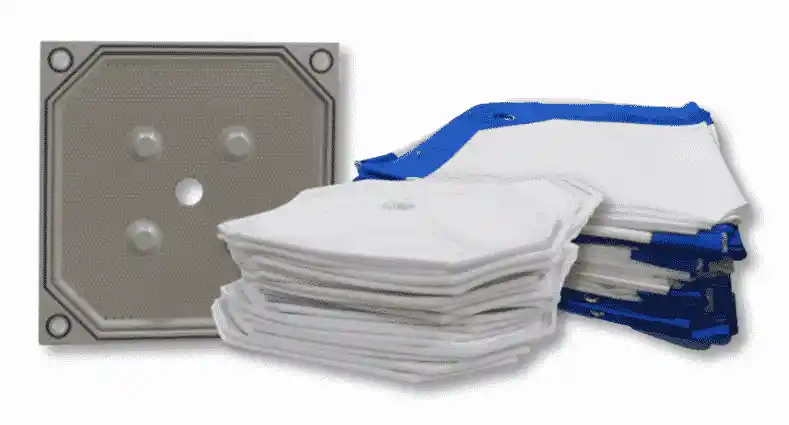
Filter Cloths for Industrial & Wastewater Filtration in Sri Lanka
The filter cloth is the core working element of any filter press system. It directly dictates cake dryness, filtrate clarity, cycle time, and clean cake release. Prudence Engineering supplies custom-engineered filter press cloths for sewage treatment plants (STPs), effluent treatment plants (ETPs), and industrial sludge dewatering applications across Sri Lanka—tailored to your exact plate dimensions, slurry characteristics, and operating pressures.
Selection of Filter Cloth
Pore Size: The cloth’s pore size (or micron rating) is essential for filtering the desired particle size. The fabric needs to have pores small enough to trap solid particles while allowing liquid to pass through. Filter press cloths come in various micron ratings to suit different filtration requirements (typically from 1 to 100 microns).
Proper cloth selection for wastewater sludge dewatering should balance three competing demands:
- Particle retention — clear filtrate, no solids carry-over
- Cake release — the cake must drop without manual scraping
- Resistance to blinding — the cloth must stay unclogged over thousands of cycles
A cloth chosen on micron rating alone almost always disappoints.
Classification by Yarn Construction
Cloth performance relies heavily on yarn structure to balance particle retention, cake discharge, and resistance to blinding (clogging).
| Yarn Construction | Ideal Application & Sludge Type | Performance Characteristics |
| Monofilament | Sticky, oily, or gelatinous sludge; automatic discharge presses | Superior cake release, high blinding resistance, easy cleaning |
| Multifilament | High-pressure & membrane filter presses; abrasive chemical sludges | High tensile strength, good mechanical durability |
| Staple Fiber (Spun) | Municipal wastewater & chemically conditioned sludge | Maximum particle retention for crystal-clear filtrate |
| Combination (Mono/Multi) | Dual-requirement industrial applications | Combines structural strength with smooth cake release |
Classification by Fiber Type
Modern wastewater filter cloths are mostly made from synthetic fibers. The most common fiber types used for wastewater applications are:
- Polypropylene (PP) — The most common choice for wastewater treatment. It offers excellent chemical resistance at a low cost.
- Polyester (PET) — Suitable for higher-temperature applications. Not recommended for lime-conditioned sludge.
- PVDF / PTFE — Used for highly corrosive chemicals or high-temperature industrial effluents. Selected only for special applications.
For most wastewater treatment plants in Sri Lanka, polypropylene (PP) is the best and most economical choice. Once the fiber material is selected, the more important factors are the yarn construction, weave pattern, and surface finish, as these have a greater impact on filtration performance.
Typical Service Life
A polypropylene filter cloth typically lasts 1,000 to 3,000 filtration cycles, which is approximately 6 to 18 months, depending on:
- How often the filter press operates
- The abrasiveness of the sludge
- Operating conditions and maintenance practices
Get Expert Selection Assistance in Sri Lanka
Need help selecting the right filter cloth? Send us your plate size, filter press type, and sludge details, and our engineers will recommend the best specification and provide a competitive quotation.